
 Mon-Sat 9.00 AM to 6.00 PM
 Send Email
Formaldehyde 50-00-0
Product Details:
- Refractive Rate 1.333 (aqueous solution)
- Ingredients Formaldehyde gas dissolved in water with methanol as stabilizer
- Poisonous YES
- Ph Level 2.8 4.0 (aqueous solution)
- Molecular Weight 30.03 g/mol
- CAS No 50-00-0
- EINECS No 200-001-8
- Click to view more
X
Formaldehyde 50-00-0 Product Specifications
- -15C (liquid aqueous solution)
- 29121100
- Organic Chemical
- Colorless, pungent odor, volatile, highly reactive
- 36-38% (commercial aqueous solution); up to 99% (anhydrous)
- Industrial / Laboratory / Technical
- Disinfectant, preservative, resin manufacture, textile finishing, laboratory reagent
- Liquid, Gas (Aqueous solution)
- 12-18 months in ideal storage conditions
- Mainly used for manufacturing resins, disinfectants, preservatives, textiles, and analytical chemistry
- Pungent, suffocating odor
- Clear, colorless liquid
- 0.815 Gram per cubic centimeter(g/cm3)
- Pungent, irritating
- Miscible with water, alcohols, and ethers
- Liquid/Amorphous
- HCHO
- Store in tightly closed containers in a cool, ventilated, dry area, away from direct sunlight and ignition sources.
- CHO
- 200-001-8
- 50-00-0
- 30.03 g/mol
- 2.8 4.0 (aqueous solution)
- YES
- Formaldehyde gas dissolved in water with methanol as stabilizer
- 1.333 (aqueous solution)
- 30 mm Hg (20 C)
- 200-001-8
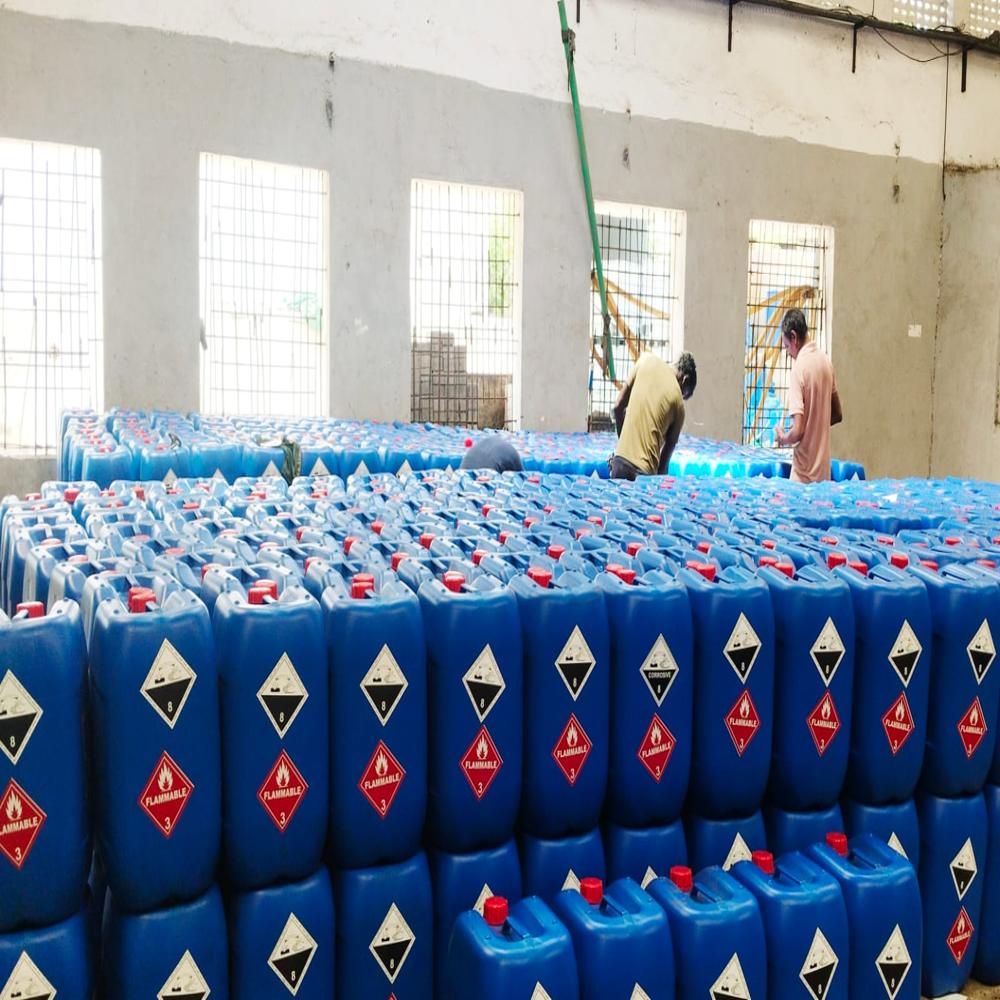
- 35 kg / 250 kg HDPE drum, bulk tank
- 300 C
- Methanol
- 8 (Corrosive), 6.1 (Toxic)
- 64 C (closed cup, 37% solution)
- Handle with care; toxic and irritant. Use personal protective equipment.
- UN 2209
- 96 C (37% solution)
Formaldehyde 50-00-0 Trade Information
- Asia, Australia, Central America, North America, South America, Eastern Europe, Western Europe, Middle East, Africa
Product Description
General description:
Chemical Formula: CH2O
Formaldehyde is an organic compound and the simplest aldehyde. It is a colourless, highly flammable gas with a pungent odour. Formaldehyde is a reactive substance and can react with many polymerizers and substances easily. However, due to its volatility and toxicity, it has negative effects on human health. Formaldehyde is readily soluble in water and is commonly distributed as a 37% solution in water.
Application & Usage:
- Formaldehyde is used as an intermediate to produce resins such as urea formaldehyde resins which is extensively used in paint industry.
- An aqueous solution of formaldehyde can be useful as a disinfectant as it kills most bacteria and fungi.
- Formaldehyde is employed as a mordant in textile manufacture during the dyeing and printing process to facilitate the bonding of color to the fabric cells.
Exceptional Chemical Reactivity
Formaldehydes high reactivity enables its vast applications, particularly in manufacturing synthetic resins, textile finishing agents, and preservatives. This property makes it invaluable across a range of industries that depend on robust bonding, cross-linking, or chemical modification processes.
Safety and Storage Precautions
Due to its toxicity and corrosive nature, formaldehyde must be handled with appropriate personal protective equipment. It should be stored in tightly sealed containers, in cool, well-ventilated spaces, away from sunlight and sources of ignition, to ensure stability and maintain maximum shelf life of 12-18 months.
FAQs of Formaldehyde 50-00-0:
Q: How should formaldehyde 50-00-0 be safely handled and stored?
A: Formaldehyde should be handled only with personal protective equipment, such as gloves, goggles, and proper ventilation. Store it in tightly closed containers in a dry, cool, and well-ventilated area, away from direct sunlight and ignition sources, to maintain its integrity and ensure safety.Q: What are the main industrial uses of formaldehyde 50-00-0?
A: Formaldehyde is primarily used in manufacturing resins (such as urea-formaldehyde and phenol-formaldehyde), as a disinfectant, preservative, and in textile finishing. It also serves as an important reagent in analytical chemistry laboratories.Q: When does formaldehyde exhibit the highest level of toxicity?
A: Formaldehyde is particularly toxic when inhaled or ingested, and its vapors are most hazardous at higher concentrations or in poorly ventilated environments. Exposure risks increase during handling, transfer, or accidental spillage if protective measures are not followed.Q: Where can formaldehyde 50-00-0 be applied for best results?
A: Optimal applications for formaldehyde include resin production for particleboard or plywood, textile processing for improved durability, and as a disinfectant or preservative in laboratories or healthcare settings, following rigorous safety protocols.Q: What is the process of using formaldehyde in resin manufacturing?
A: In resin manufacturing, formaldehyde is typically reacted with urea, phenol, or melamine in regulated conditions to create strong, durable polymers used in a variety of products, including adhesives, coatings, and molded objects.Q: What benefits does formaldehyde offer in industrial and laboratory environments?
A: Formaldehyde provides excellent antimicrobial and preservative properties, makes durable industrial resins, and acts as a reliable laboratory reagent, facilitating research and product development across multiple industries.Tell us about your requirement

Price:
Quantity
Select Unit
- 50
- 100
- 200
- 250
- 500
- 1000+
Additional detail
Mobile number
Email

Other Products in 'Chemical Intermediates' category

We are looking mainly for Export inquiries.
CHEM (INDIA)
GST : 24AAFFC9929D1ZH

- Plot No. 1108/C, Behind GIDC Post Office,Ankleshwar - 393002, Gujarat, India
- Phone : 08045802419



-
 Send Inquiry
- Mr. Bhavesh Patel (Partner)
Mobile :08045802419, 09824151066
Sister Concern Company
Pilot Industries
Star Chem (India)
Bhavi Traders
Mr. Deepak Patel (Partner)
Mobile No : +91 9824100205
 Send Inquiry
 Send Inquiry
 Send SMS
 Call Me Free
CHEM (INDIA)
All Rights Reserved.(Terms of Use)
Developed and Managed by Infocom Network Private Limited.
Developed and Managed by Infocom Network Private Limited.


 English
 Spanish
 French
 German
 Italian
 Chinese (Simplified)
 Japanese
 Korean
 Arabic
 Portuguese