
 Mon-Sat 9.00 AM to 6.00 PM
 Send Email
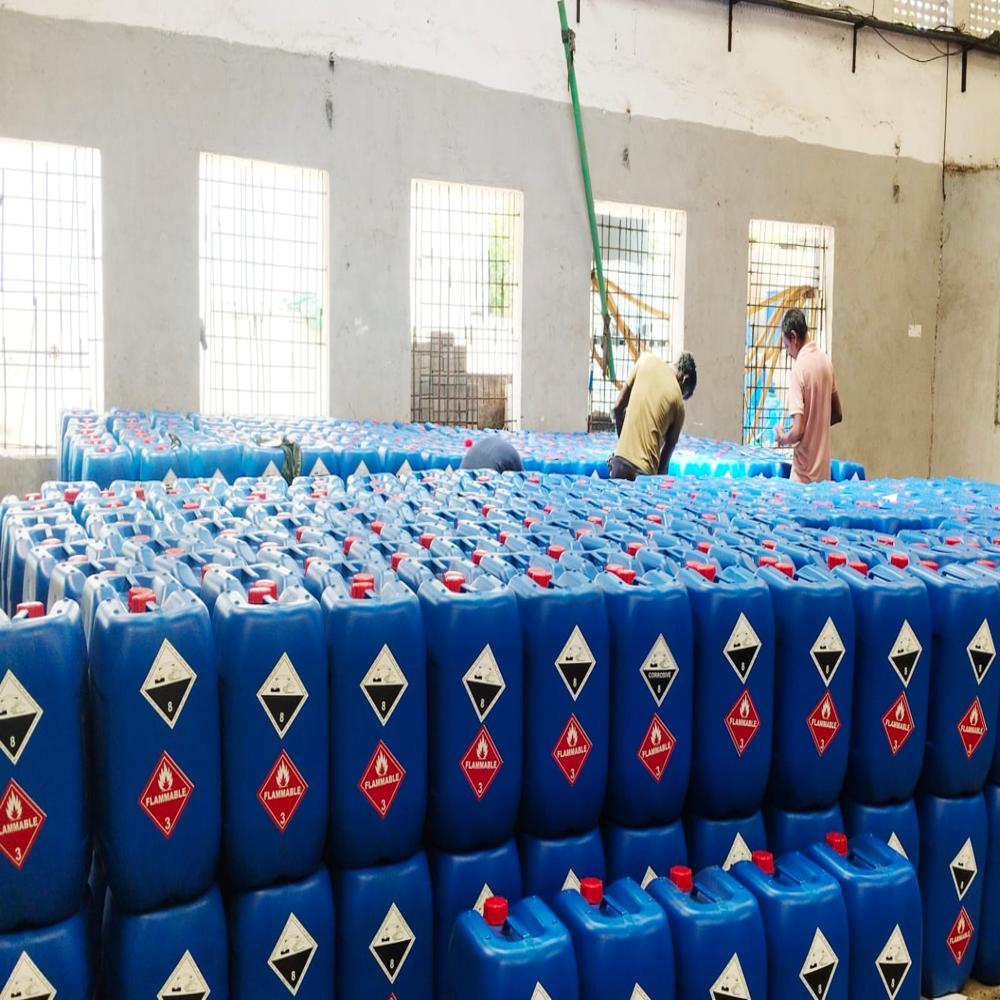
Hydrogen peroxide
2000.0 INR/Liter
Product Details:
- Shelf Life 1-2 years in proper conditions
- Usage Diluted as per end application; avoid contact with skin and eyes
- Purity 35%, 50%, Up to 90%
- Ingredients Hydrogen peroxide (H2O2), water (stabilized)
- CAS No 7722-84-1
- Grade Industrial, Laboratory, Pharmaceutical, Technical
- Product Type Inorganic Chemical Compound
- Click to view more
X
Hydrogen peroxide Price And Quantity
- 2000.0 INR/Liter
- 1000 Liter
Hydrogen peroxide Product Specifications
- 231-765-0
- Liquid in container
- Inorganic Chemical Compound
- 7722-84-1
- Industrial, Laboratory, Pharmaceutical, Technical
- 35%, 50%, Up to 90%
- Hydrogen peroxide (H2O2), water (stabilized)
- Diluted as per end application; avoid contact with skin and eyes
- 1-2 years in proper conditions
- Acidic (pH 3.5-4.5 for pure solution)
- H-O-O-H
- Colorless, transparent liquid
- 34.01 g/mol
- H2O2
- Slightly sharp, pungent odor
- 1.406 (20C, 100% solution)
- Colorless liquid, strong oxidizer, unstable at high concentrations, decomposes into water and oxygen
- Bitter (not recommended for tasting due to toxicity)
- Liquid
- 28470000
- Miscible with water
- 1.45 Gram per cubic centimeter(g/cm3)
- -0.43C
- Bleaching agent, disinfectant, water treatment, chemical synthesis, antiseptic
- Store in a cool, well-ventilated place, in tightly closed containers, away from heat and direct sunlight
- YES
- -0.43C
- 5 mmHg at 30C (for 30% solution)
- Use PPE such as gloves, goggles; avoid inhalation of vapors
- 2015
- 5.1 (Oxidizer)
- HDPE drums/cans with hazard labels, usually 30/50 kg canisters
- Non-flammable, but accelerates combustion
- 150.2C (decomposes before boiling at high concentrations)
- Releases oxygen and water on decomposition
Product Description
our primary goal is to provide information that is thoroughly reviewed, accurate, and reliable. However, it is important to note that the content provided here should not be considered a substitute for professional medical advice. The information presented on our platform is intended for educational purposes only and may not cover all aspects of specific health conditions, medications, potential side effects, drug interactions, warnings, or alerts. We strongly encourage consulting with a qualified healthcare professional for advice and guidance regarding their health concerns and medication needs.Powerful Oxidizing Agent for Diverse Applications
Hydrogen peroxide acts as a strong oxidizing agent, making it essential in industries like textile bleaching, water treatment, and chemical synthesis. Its high reactivity enhances cleaning and disinfection processes, providing reliable performance for various end uses.
Safe Packaging and Compliance
To ensure safety during transport and storage, hydrogen peroxide is typically supplied in high-density polyethylene (HDPE) drums or cans with clear hazard labeling. The containers meet international hazard and shipping standards (UN 2015, Class 5.1) and protect the integrity of the product.
Storage and Handling Guidelines
For optimal shelf life and safety, hydrogen peroxide should be stored in tightly closed containers in a cool, well-ventilated area, away from heat and direct sunlight. Users must wear protective gear such as gloves and goggles, and avoid inhaling vapors during handling.
FAQ's of Hydrogen peroxide:
Q: How should hydrogen peroxide be handled and stored safely?
A: Hydrogen peroxide should be handled in well-ventilated areas using personal protective equipment (PPE) like gloves and goggles to prevent skin and eye contact. It must be stored in tightly closed HDPE containers, away from heat, sunlight, and incompatible substances, to avoid decomposition and ensure maximum shelf life.Q: What are the main industrial and laboratory uses of hydrogen peroxide?
A: Hydrogen peroxide is widely used as a bleaching agent, disinfectant, and in water treatment applications. It is also involved in chemical synthesis, and serves as an antiseptic for laboratory and pharmaceutical purposes. Its strong oxidizing properties make it valuable for reactors and environmental treatment processes.Q: When does hydrogen peroxide decompose, and what are the risks associated?
A: Hydrogen peroxide can decompose at high concentrations or when exposed to heat, light, or contaminants. Upon decomposition, it releases oxygen and water, and may accelerate combustion with flammable materials. To minimize risk, ensure proper storage away from heat sources and direct sunlight.Q: Where can hydrogen peroxide be sourced and in what packaging types?
A: Hydrogen peroxide is available through exporters, suppliers, and traders in India and globally. It is typically shipped in 30 kg or 50 kg HDPE drums or canisters, each clearly labeled with its hazard identification and handled under strict regulatory compliance.Q: How is hydrogen peroxide used in water treatment and disinfection?
A: In water treatment, hydrogen peroxide is diluted and applied to disinfect water by breaking down organic contaminants and pathogens. It acts as an effective disinfectant due to its ability to oxidize and neutralize harmful microorganisms, leaving no harmful residues.Q: What makes hydrogen peroxide beneficial compared to other oxidizing agents?
A: Hydrogen peroxide's main advantage is its clean decomposition into water and oxygen, making it environmentally friendly. Its strong oxidizing action, combined with the absence of toxic residues, offers significant benefits for industrial, laboratory, and water treatment applications.Tell us about your requirement

Price:
Quantity
Select Unit
- 50
- 100
- 200
- 250
- 500
- 1000+
Additional detail
Mobile number
Email

Other Products in 'Chemical Intermediates' category

We are looking mainly for Export inquiries.
CHEM (INDIA)
GST : 24AAFFC9929D1ZH

- Plot No. 1108/C, Behind GIDC Post Office,Ankleshwar - 393002, Gujarat, India
- Phone : 08045802419



-
 Send Inquiry
- Mr. Bhavesh Patel (Partner)
Mobile :08045802419, 09824151066
Sister Concern Company
Pilot Industries
Star Chem (India)
Bhavi Traders
Mr. Deepak Patel (Partner)
Mobile No : +91 9824100205
 Send Inquiry
 Send Inquiry
 Send SMS
 Call Me Free

CHEM (INDIA)
All Rights Reserved.(Terms of Use)
Developed and Managed by Infocom Network Private Limited.
Developed and Managed by Infocom Network Private Limited.


 English
 Spanish
 French
 German
 Italian
 Chinese (Simplified)
 Japanese
 Korean
 Arabic
 Portuguese
